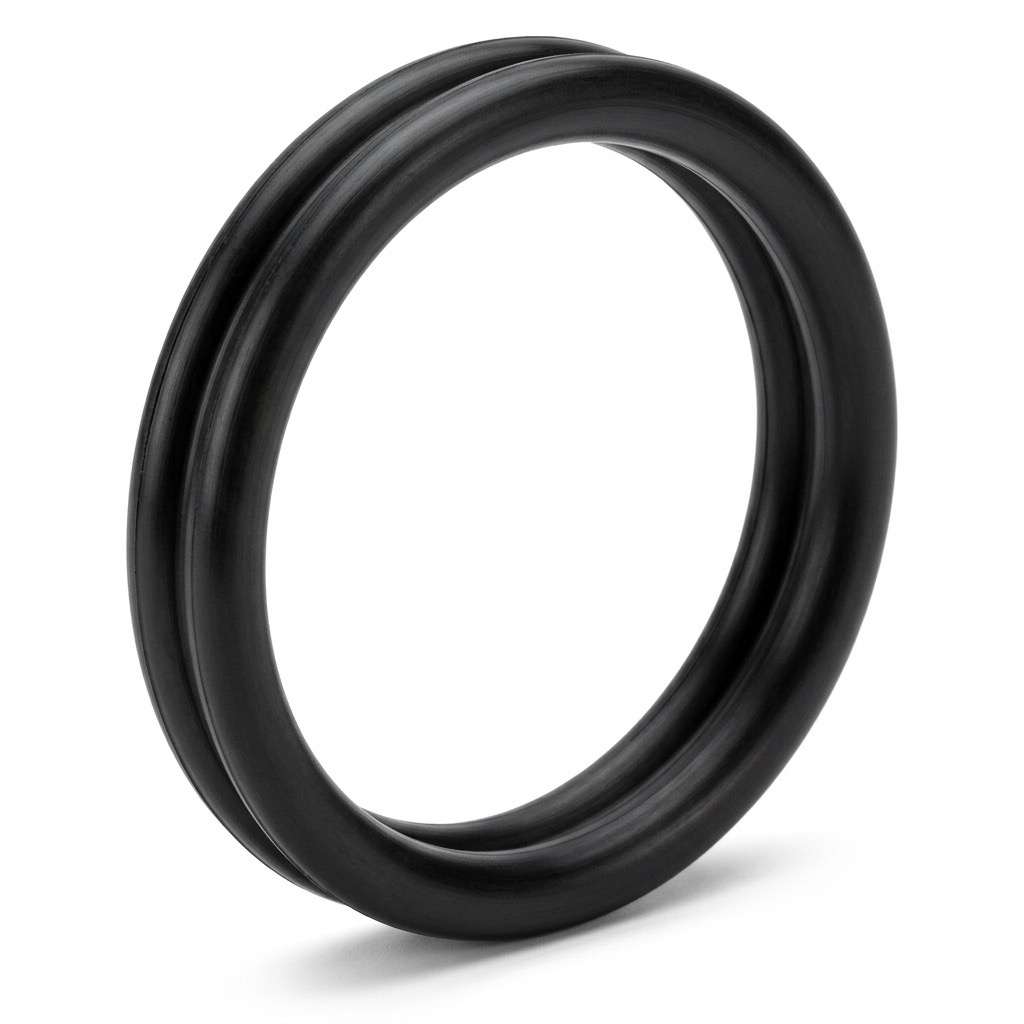
FKM X-Rings 75 Duro Black V750100-X-470
| Qty | Price |
|---|---|
| 1 - 1 | $139.8600 |
| 2+ | $138.9800 |
Ordering in large quantities? Ask for a lead time quote — we'll get back to you with pricing and lead time.
| Material | FKM |
| Cross Sectional Shape | X |
| Hardness | 75 |
| Dash | 470 |
| Fractional |
|
| Actual (Inch) |
|
| Actual (Metric) |
|
FKM (Fluorocarbon) X-Rings are made from a synthetic rubber compound primarily consisting of vinylidene fluoride (VDF) and hexafluoropropylene (HFP). These seals are known for their excellent resistance to high temperatures, chemicals, oils, and fuels. FKM X-Rings (also known as quad rings) feature a four-lobed cross-section that provides two sealing surfaces, offering superior sealing performance compared to standard O-rings. The 75 Duro (Shore A) hardness offers an optimal balance of flexibility and mechanical strength. FKM X-Rings provide superior mechanical strength, excellent resistance to aging, and high resistance to aggressive media, making them ideal for high-performance applications across automotive, industrial, and aerospace sectors. The X-Ring design also reduces friction and resists spiral twist and roll, extending seal life in dynamic applications.
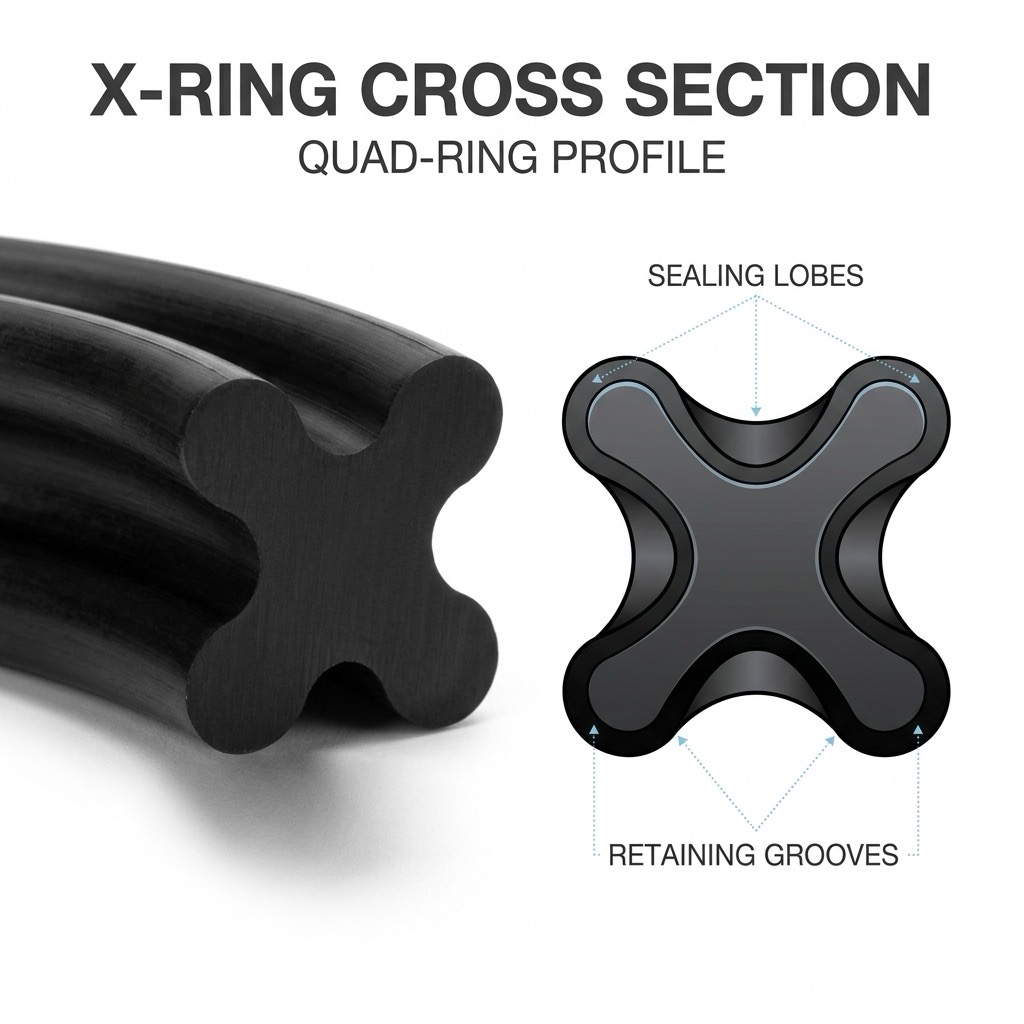
What Is an X-Ring?An X-Ring (also called a Quad Ring) is an elastomeric seal with a four-lobed, X-shaped cross-section instead of the round profile of a standard O-Ring. This geometry creates two distinct sealing lines (four contact lips) rather than a single contact line, and the valleys between the lobes act as small reservoirs.
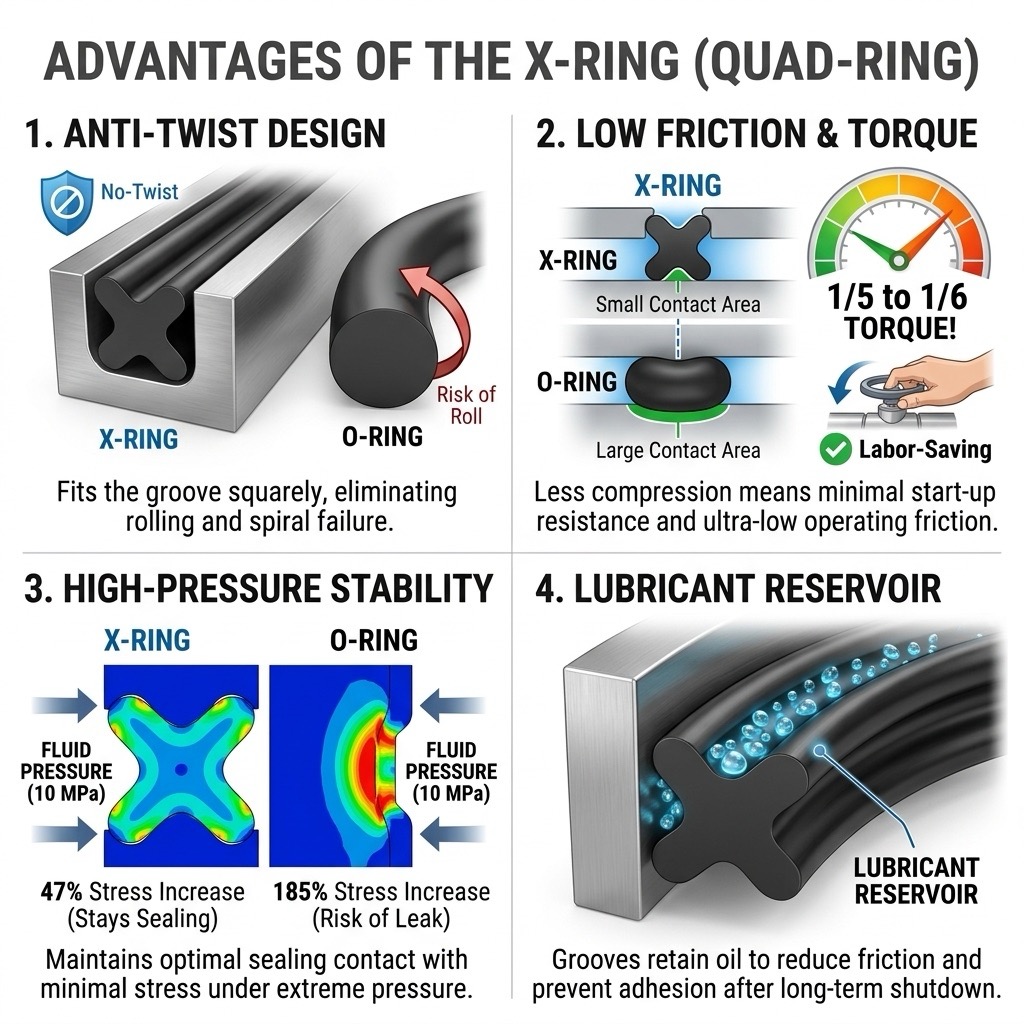
Key Benefits of an X-Ring Over a Standard O-Ring- Resists Rolling and Twisting — The four-lobed shape engages the groove more positively, preventing the seal from rolling or spiraling during dynamic motion—a common failure mode for O-Rings in reciprocating applications.
- Lower Friction and Smoother Motion — Because the sealing load is distributed across two contact lines, an X-Ring requires less squeeze to seal effectively. This reduces contact stress, friction, and heat generation. Some tests have shown X-Rings requiring as little as 1/5 to 1/6 the torque of an O-Ring in valve applications.
- Built-In Lubrication Pockets — The recesses between the four lobes trap lubricant or process media, maintaining a film at the sealing interface. This helps reduce breakaway friction, stick-slip behavior, and wear over repeated cycles.
- Better Stability and Extrusion Resistance — The wider base and multiple contact points give the seal greater stability within the groove, making it less prone to extrusion under pressure compared to a round O-Ring.
- Protects the Sealing Surface — The mold parting line on an X-Ring is positioned in the valley between lobes, keeping the actual sealing lips free from flash or irregularities that could cause leaks.
X-Rings are most valuable in dynamic applications—reciprocating motion, rotary shafts, frequent start-stop cycles, and directional changes—where O-Rings are prone to twisting or premature wear. For simple, stable static sealing, a standard O-Ring often remains the more cost-effective choice.
Many X-Rings are also designed to fit into standard O-Ring grooves, making them a practical upgrade without requiring hardware redesign.
FKM X-Ring Recommended UsesSeals and gaskets, chemical processing, automotive fuel systems, hydraulic systems, aerospace applications, high-temperature applications, oil and gas industry, extreme environment applications, and dynamic sealing applications where reduced friction and resistance to spiral failure are beneficial.
FKM X-Ring Not RecommendedKetones, esters, amines, low molecular weight acids, and some high-temperature steam systems.
FKM X-Ring Limitations- Not suitable for low-temperature environments.
- Limited performance in swelling from contact with certain fuels and solvents.
- Not recommended for applications involving polar solvents.
- Not ideal for applications that involve high shear or abrasion conditions.
-20 to 450°F (-29 to 232°C)
FKM X-Ring Also Known AsFKM X-Ring, Quad Ring, FKM Quad Ring, Viton® X-Ring, Fluorel®, Fluoroelastomer X-Ring, Fluorocarbon Elastomer X-Ring.